Full-color prints on almost any fabric — cotton, polyester, blends, even nylon.
DTF prints your full-color design onto a special film, then heat-presses it onto the garment — splitting the difference between DTG's full-color range and screen printing's durability, and working on fabrics neither of those handles well, including polyester and blends that DTG pretreatment doesn't bond to.
☎ Have a question? Call us or request a quote.
 DTF Printing
Best For
- Polyester, poly-blends, and performance/athletic fabric that DTG can't print on directly
- Full-color designs on small to mid-size orders
- Designs that need to go on unusual fabric colors or textures — DTF's white underbase handles this better than most methods
DTF prints your full-color design onto a special film, then heat-presses it onto the garment — splitting the difference between DTG's full-color range and screen printing's durability, and working on fabrics neither of those handles well, including polyester and blends that DTG pretreatment doesn't bond to.
From art file to finished piece.
Your design prints onto a clear film in full color, with a white underbase layer built in automatically.
A hot-melt adhesive powder is applied to the printed film and cured, which is what lets the design transfer and bond to the fabric.
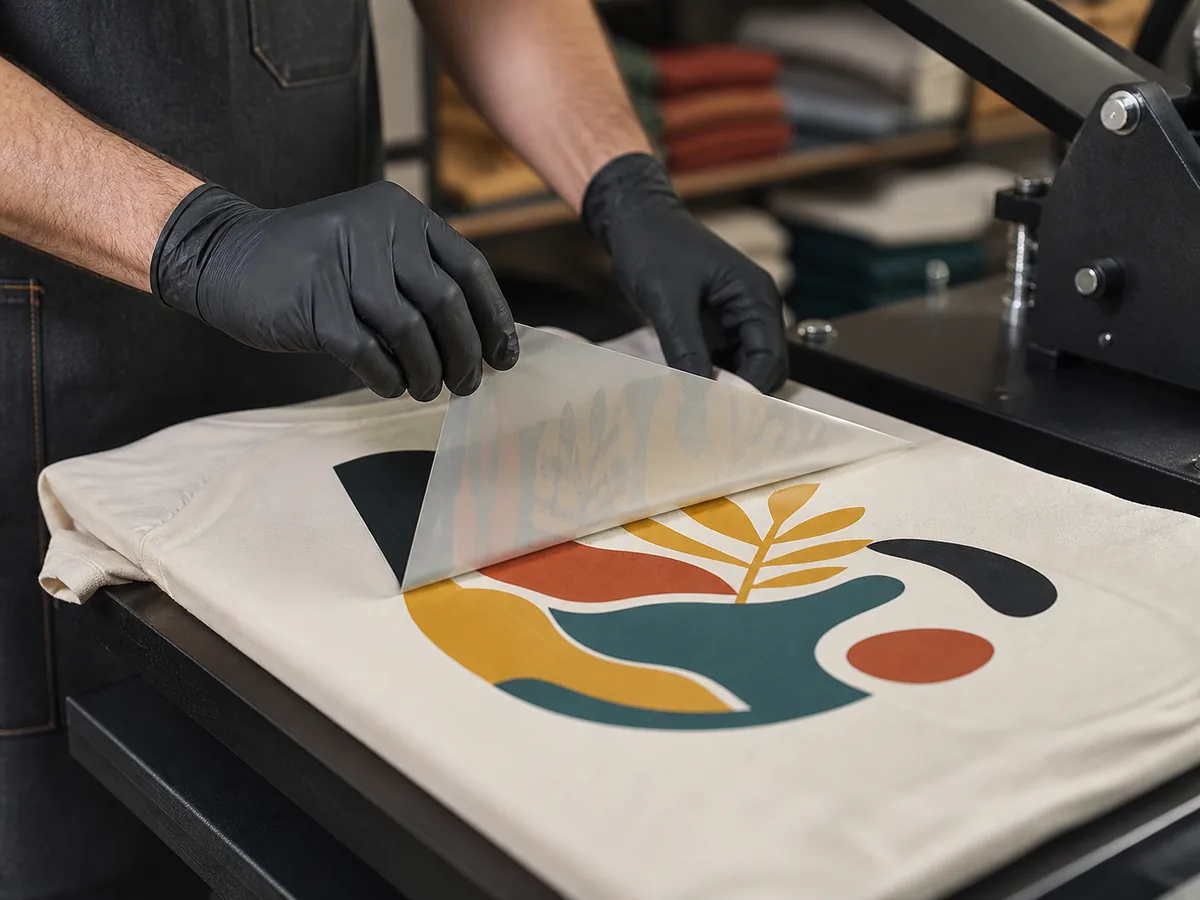
The film is pressed onto the garment with heat and pressure, transferring the full design in one pass.
The film backing is peeled away, leaving the design bonded directly to the fabric surface.
Best For
- Polyester, poly-blends, and performance/athletic fabric that DTG can't print on directly
- Full-color designs on small to mid-size orders
- Designs that need to go on unusual fabric colors or textures — DTF's white underbase handles this better than most methods
Less Ideal For
- Very large runs of a simple 1–2 color design — screen printing still wins on price at volume
We'll say so upfront and point you to the right method instead.
What it costs, how long it takes.
Pricing
Priced per piece based on design size, same logic as DTG — no per-color setup fee. DTF transfers can also be purchased separately if you're pressing your own garments; ask for transfer-only pricing.
Turnaround
Standard turnaround is 3–5 business days from art approval.
DTF Printing questions, answered straight.
What's the difference between DTF and DTG?
DTG prints ink directly into the fabric fibers, which requires a cotton or high-cotton-blend surface. DTF prints onto film first, then heat-presses onto the garment — which means it works on cotton, polyester, blends, and some non-fabric surfaces DTG can't touch.
Does DTF work on polyester and athletic wear?
Yes — this is one of DTF's main advantages. DTG pretreatment doesn't bond well to polyester; DTF's film-transfer method does.
How durable is a DTF print?
Well-applied DTF holds up to regular washing similarly to screen printing — it's a bonded, flexible layer rather than an ink-in-fiber print, so it stays vibrant and doesn't crack the way a poorly cured screen print would.
Can you do DTF transfers I press myself?
Yes, transfer-only orders are available if you have your own heat press — ask when you request a quote.
DTF Printing pricing and details, by area.
Not quite the right fit?
Ready to price out your direct-to-film printing?
One piece or two hundred — you'll get exact, itemized pricing before anything goes into production.
☎ Have a question? Call us or request a quote.